Nominate for the Technician Economy™ Futures Council.
The Futures Council brings together leaders from industry and community and technical colleges to guide national technician infrastructure and workforce systems.
Nominate for the Technician Economy™ National Competitiveness Council.
The Technician Economy™ National Competitiveness Council is a national strategic body responsible for shaping how the Technician Economy™ is understood, adopted, and activated across the country.
Activating the
TechnicianEconomy™
Infrastructure. Foresight. Coordination at Scale.
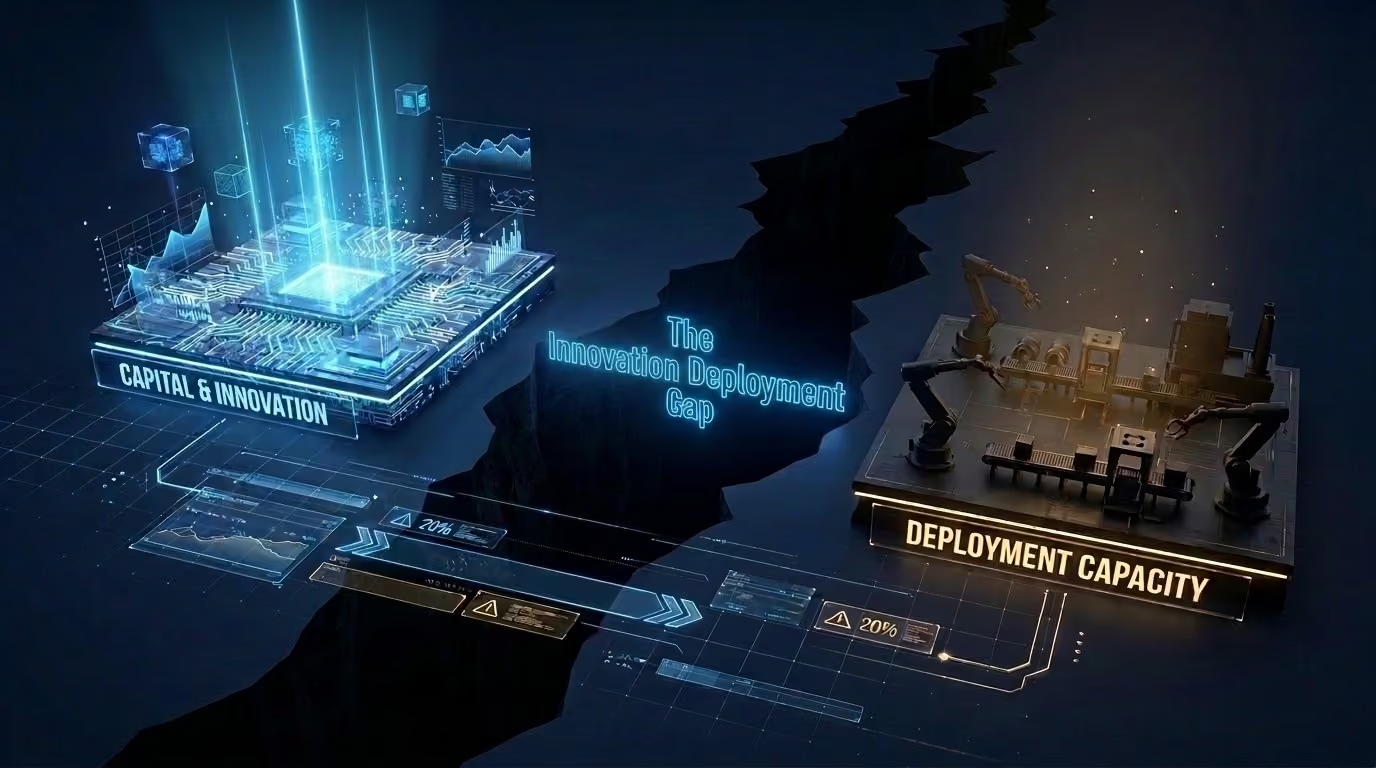
The Technician Economy™ closes the Innovation Deployment Gap, converting capital investment into increased operating capacity and opportunity into durable economic mobility.
TechnicianEconomy.org defines the framework. TechniciansOfTomorrow.org activates it.
The Technician Economy™ defines the economic system required to turn investment into operating capacity and durable mobility. Technicians of Tomorrow™ activates the leaders, councils, capital, regions, and institutions needed to make that system work.
Technician Coordination Infrastructure
1,100+ community and technical college locations geographically aligned with America’s manufacturing base.
10 million students enrolled annually, the country's largest education network.
TechniciansofTomorrow.orgActivates the framework through councils, regions, funding, research, and partner action
Core Clarity
Technician capacity must align across employers, community colleges, regions, capital, and measurement systems.
Fragmented programs cannot resolve systemic production constraints.
Coordinated architecture converts technician activity into operating capacity.
The gap is not effort. It is design.
Why Activation Matters Now
The U.S. Economy is No Longer Constrained By Innovation. It is Constrained By Deployment.
The next phase is not just awareness. It is activation.
Historic investment is flowing into manufacturing, energy, semiconductors, AI infrastructure, aviation, logistics, life sciences, and advanced industry. But investment does not become operating capacity unless technicians are available to build, operate, maintain, and sustain these systems.
Technician Coordination Infrastructure
1,100+ community and technical college locations geographically aligned with America’s manufacturing base.
10 million students enrolled annually, the country's largest education network.
These efforts built nodes of alignment, but were structured as funding initiatives, not coordinated production infrastructure.
Highwaysmove goods.
Gridsmove electricity.
Capital marketsmove money.
Techniciansmove industry.
Core Clarity
Technician capacity must align across employers, community colleges, regions, capital, and measurement systems.
Fragmented programs cannot resolve systemic production constraints.
Coordinated architecture converts technician activity into operating capacity.
The gap is not effort. It is design.
The Imperative
Technicians support the infrastructure to move industry forward.
Highwaysmove goods.
Gridsmove electricity.
Capital marketsmove money.
Techniciansmove industry.
Core Clarity
Technician capacity must align across employers, community colleges, regions, capital, and measurement systems.
Fragmented programs cannot resolve systemic production constraints.
Coordinated architecture converts technician activity into operating capacity.
The gap is not effort. It is design.
The Industrial Inflection Point
$421.7B+ in federal industrial investment is underway to build semiconductor fabs, energy facilities, and robotics-enabled smart factories. $421.7B+ in federal industrial investment is being deployed across semiconductors, energy, and advanced manufacturing.
These systems do not scale on engineering alone; they scale on technician density. This is not a skills gap, it is an infrastructure constraint.
Technician Coordination Infrastructure
1,100+ community and technical college locations geographically aligned with America’s manufacturing base.
10 million students enrolled annually, the country's largest education network.
Predictability made transparent lets every American act on the opportunity. This is how we create economic mobilityat scale.
The Shift
The U.S. economy is no longer constrained by innovation. It is constrained by deployment.
Growth does not occur simply when technology exists. It occurs when systems are deployed, operated, and sustained at scale.
Therefore, the economic constraint has shifted:
Innovation scarcityDeployment capacity
Research and developmentTechnician density
Capital accessCoordination architecture
This shift defines the Technician Economy™.
The Core Economic Function
The Technician Economy™ is the economic system that converts industry demand into deployable technician capacity, increasing operating capacity and durable economic mobility.
Deployment is the mechanism of the conversion. When this system functions, it produces two outcomes:
Operating capacity at scale
Durable economic mobility
These are not adjacent effects. They are the outputs of a functioning economic system.
The Constraint
Today, this conversion does not happen consistently. Demand, capacity, and deployment operate independently. As a result:
Demand does not become operating capacity
Deployment does not scale
Economic mobility does not materialize
This is the innovation–deployment gap. The issue is not effort, it is system design.
Future State: Today vs. Tomorrow
From fragmented workforce activity to an activated Technician Economy™
The Future State
In a fully realized Technician Economy™:
Demand converts into operating capacity predictably
Deployment scales with the pace of investment
Systems operate continuously at required performance
Capacity formation and deployment are coordinated
Growth is no longer constrained by execution gaps
The economy reorganizes around the ability to convert demand into operating capacity.
TODAY
Technician demand is often invisible or fragmented across employers.
Training programs often operate without clear employer demand signals.
Regions compete for talent without shared technician capacity strategies.
Funders support isolated programs with limited system visibility.
Technician roles are treated as operational labor gaps.
Outcomes are measured mainly by enrollments or completions.
TOMORROW
Technician demand is visible, aggregated, and organized by region and sector.
Skill paths are aligned to verified employer demand and hiring timelines.
Regions coordinate employers, colleges, funders, and civic partners around technician capacity.
Capital supports clearly defined technician access, pathway participation, and regional outcomes.
Technician capacity is treated as economic infrastructure.
Outcomes are measured by throughput, job movement, deployment capacity, and enterprise impact.
Why This Matters Now
If We Do Nothing
Employer engagement remains fragmented
Programs operate without coordinated throughput metrics
The Technician Economy requires more than analysis. It requires organized leadership capable of shaping the future and activating the present.
Technician Economy Futures Council™
Infrastructure. foresight. coordination at scale.
Infrastructure requires institutional action.
Co-chaired by Matt Austin, J.D, Principal, Program Strategy & Development, Amazon Career Choice . Tracy Hartzler, J.D, President, Central New Mexico Community College
The Futures Council defines where technician capacity must go next. It brings together employers, colleges, workforce innovators, and systems leaders to identify emerging technician roles, future skill requirements, training-model shifts, and the capabilities regions will need to stay competitive.
Technician Economy™ National Competitiveness Council
Strategy. Alignment. National Action.
Co-chaired by Matt Austin, J.D, Principal, Program Strategy & Development, Amazon Career Choice . Tracy Hartzler, J.D, President, Central New Mexico Community College
The National Competitiveness Council aligns strategy, capital, policy, research, and institutional action around the Technician Economy™. It helps move technician capacity from a hidden workforce issue to a core national competitiveness priority.
The Council's work moves the Technician Economy™ beyond awareness into coordinated regional, state, and national action, advancing economic performance, industrial competitiveness, operating capacity, domestic self-sufficiency, national security, and durable economic mobility.
THE COUNCIL
Establishes the national strategy for the Technician Economy™
Defines the alignment agenda, shared language, priorities, and organizing framework
Positions technician capacity as essential economic infrastructure
Aligns research, strategy, policy, funding, and institutional action
Helps public, private, philanthropic, and civic organizations study and measure technician capacity
Supports investment in and activation of technician capacity across sectors
Activate the Technician Economy™ in your region, sector, or institution
The Technician Economy™ is a framework any region can activate. Technicians of Tomorrow™ helps employers, chambers, economic development organizations, colleges, funders, and civic partners move from shared concern to coordinated action.
Cover Technician Economy™ as systemic infrastructure
Elevate analysis over anecdotal narratives
Track regional technician density as a competitiveness indicator
Partnership Pathways
Partnership Pathways
The Technician Economy™ is a framework any region can activate. If the questions below resonate with your organization, we want to hear from you.
Technician Economy™ National Partner
Highest level of national partnership
Technician Economy™ Regional Catalyst
Regional activation and implementation partner
Technician Economy™ Alliance Member
Community, advocacy, and ecosystem partner
Become a Partner
Technician Economy™: Partnership Pathways
Thank you! Your submission has been received!
Oops! Something went wrong while submitting the form.
Future Technician Fund
Fund the Next Generation of America's Technicians
The Future Technician Fund helps current and future technicians access the skills, credentials, and training pathways needed to move into technician roles.
Amazon created the Future Technician Fund™ to grow the next generation of RME technicians.
The Amazon Future Technician Fund™ supports scholarships that prepare qualified technicians for the hands-on roles powering Amazon’s fulfillment operations.
Core Clarity
Technician capacity must align across employers, community colleges, regions, capital, and measurement systems.
Fragmented programs cannot resolve systemic production constraints.
Coordinated architecture converts technician activity into operating capacity.
The gap is not effort. It is design.
Research & Technician Economy Review™
Research, foresight, and social impact, made public.
Stay ahead of the signals shaping America’s industrial future. Trends, data, policy developments, and coordination frameworks for philanthropy, government, think tanks, boards, and policy leaders.
CORD, Technician Economy, and Unmudl® are collecting technician success stories for potential inclusion in the Technician Build Your Future IMAX Production and related national storytelling efforts.
We are looking for compelling technician stories that demonstrate how community and technical college programs led by America's community and technical colleges are helping power today's economy, infrastructure, and critical industries.
Selected story submissions may be reviewed for possible invitation to a casting call. Submission does not guarantee inclusion in a film or related Technician Economy™ materials. Individuals whose stories are selected to move forward will be invited into a formal casting review process. As part of that process, the production team may review publicly available social media and other relevant public information.
Takes about 5 minutes
Selected stories invited to casting review
Built in the Open
The Technician Economy™ is Being Defined in Real Time.
Technicians of Tomorrow™ brings together the leaders, institutions, regions, employers, funders, and partners needed to activate the Technician Economy.
Activate Your Region
Choose the level of engagement that matches your role in activating technician capacity.
.jpeg)
.svg)